
It has been quite a while since I last posted on this blog. There is a good reason for that: I was diagnosed with breast cancer in the fall of 2012. My blogging was done through CaringBridge* during the last year and a half, concentrating on my cancer experience. All is going well now as far as my cancer is concerned, and I feel it is time that I should blog about something other than my cancer. I had as great an experience as I think anyone could have when going through cancer treatment. It wasn’t free of complications or side effects or pain, but I think I suffered much less than many people do when going through it. I found it relatively easy to remain upbeat (for the most part) and to share my blessings as well as my distresses. I was impressed by other people’s blogs as well, by those who could write about joy in the midst of pain and suffering.
We feel comforted when we come across someone willing to write rawly about their experiences. The flash of commiseration binds us together–the writer as a sudden best friend. However, it seems that joy is not written about as often as pain. It is not written about as rawly, either. It is difficult to be uninhibited when writing about joy; there are more trite expressions of joy than of pain. Why? Are we as scared of feeling true joy as we are of pain? Do we feel that writing and talking about joy is less valid than talking or writing about pain? If so, why? Do we fear that people will ignore us and think we need no help, that we may be better off than they are if we concentrate on the flares of joy rather than the plunges of discouragement? I’ve heard people complain that all they hear from others is how bad their lives are and how draining that can be. But do we truly pay attention to those who talk about the blessings they find in the midst of heartache? Many times I have also heard frustration expressed about other people’s Christmas letters, how all seems hunky-dory in them, how everything their children do is exceptional; it can cause jealousy and resentment in the reader. Would we enjoy those Christmas letters more if the parents expressed disappointment; would we feel happier if they recounted their children’s shortcomings? Is it easier to relate to someone else’s pain than their joy? The word empathy is almost always connected with feeling someone else’s pain. Why can’t it be connected more often to feeling someone else’s joy? Why does hearing of others’ joy so often pique our acrimony?
I find it somewhat difficult to write rawly about joy. Is joy softer than pain? Joy can make you cry, too. Truly raw joy can start as a spark and quickly race over our bodies to burn brightly and consume us. I am trying to be more conscious about recognizing flashes of joy, but I think I am a bit frightened of letting it run roughshod over me. Am I afraid of the pain of joy? So often we admire people who are stoic about their pain, but stoicism can extend to joy, too. Let us not forget to feel the joy and to share it with others. Perhaps by spreading more along (and accepting others’ expression of it) we will be able to counteract some of the creeping selfishness in our society.
To share joy, we need to recognize it. It will be different for everyone, just as pain is felt differently by each person. Some descriptions may resonate with you while others certainly will not. Here are a few of my attempts to approximate what joy is (tastes, feels, smells, sounds, looks) like to me:
A freshly-sliced, perfectly-ripe avocado.
The scent of vanilla, ripe with lemon.
The sweet chewiness of nori in sushi.
A cat’s chirp or trill.
A dog’s commiseration with your pain.
Blood-red pomegranate arils and the burst of them your mouth.
A bright blue sky seen through the bare branches of a sycamore tree in winter.
The crunch of shimmering white snow.
A sunset’s gleam over a snowy landscape.
The caress of a cool breeze on a muggy day.
Hard-packed sand under bare feet on a sunny beach.
The earthy stimulation of a morning mug of robust coffee.
The bright colors and glossy leaves of tropical flora.
A handwritten card or letter from a friend.
A pristinely clean public bathroom.
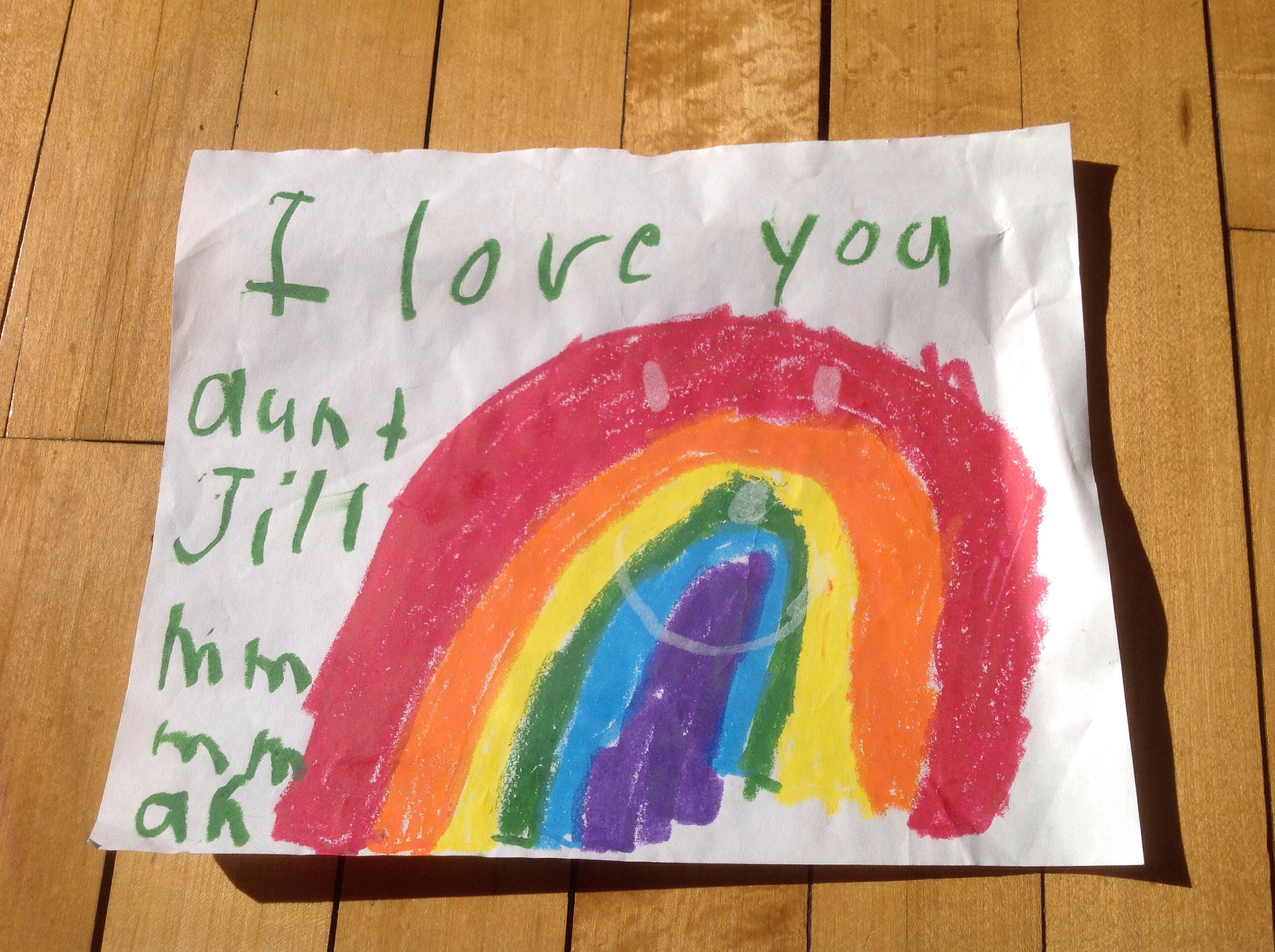
A child’s scrawled “I love you” on a picture they drew for you.
A strong hug that lasts as long as it’s needed.
The ability to breathe freely after the congestion of a cold is gone.
The silky curls of a toddler’s hair.
A baby’s grin.
The crisp, brown crust at the bottom of a fondue pot.
Am I wrong in my impression that it is easier to talk about and to share pain than it is to express and empathize with joy? What are your thoughts?
How would you describe joy? What examples of the five senses run through your mind when you think about joy: taste, touch, smell, hearing, sight?
*www.CaringBridge.org is a wonderful (free; supported by donations) resource for patients and families going through major medical illnesses. I found it to be extremely helpful to keep in contact with friends and extended family, to provide updates about my treatment and to just share how I was feeling about what I was going through. They could access it anytime, and it kept me from having to remember to whom I told what. I still greatly appreciated being contacted personally though, and many, many people did that. In fact, I think that being on CaringBridge really broadened my support base.
 Secondary Intention